

A handful of computer tips and tricks can save you real time every single day — reopening a tab you closed, snapping windows into place, grabbing a scrolling screenshot, or finding one tab in a sea of others.
Below are 40 of them, grouped by what you are actually trying to do, so you can jump straight to the section you need.
These computer tips and tricks are the shortcuts and hidden features that save the most time — reopening closed tabs with Ctrl + Shift + T, showing the desktop with Windows + D, snapping windows side by side, capturing a scrolling screenshot, and searching your open tabs. Most work on Windows, and many have Mac equivalents.
Table of Contents
ToggleBrowser Tips That Save the Most Time
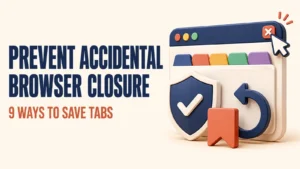
1. Reopen a Tab You Closed by Accident
Closed the wrong tab? Press Ctrl + Shift + T (Cmd + Shift + T on Mac) and it comes right back.
Keep pressing and it reopens the last several tabs one at a time, in the order you closed them — even from before you restarted the browser.
2. Open Links in a New Tab With One Click
Middle-click a link — press the scroll wheel straight down — to open it in a background tab without leaving the page you are on.
Middle-click an open tab instead and it closes. It is the fastest way to work through a whole page of search results.
3. Close the Current Tab or Window Instantly
Skip the trip to the little X. Press Ctrl + W to close the current tab.
Need the entire window gone? Use Ctrl + Shift + W. Both beat aiming for a tiny button.
4. Copy a Link in Two Keystrokes
Right-click a link as usual, then tap E on your keyboard to copy its address.
It is quicker than dragging down the menu to find Copy link, especially when you are grabbing several in a row.
5. Search Your Open Tabs Instead of Scrolling
Drowning in tabs? Press Ctrl + Shift + A in Chrome or Edge to search them by name.
Type part of a title and jump straight to the tab you need, with no squinting at tiny favicons.
6. Jump to the Address Bar Instantly
In any browser, press Ctrl + L (or Alt + D) to select the address bar.
Type a search term or web address and press Enter — you never have to click up there again.
7. Clear Browsing Data in Seconds
Press Ctrl + Shift + Delete in any browser to open the clear-data window.
Choose what to wipe — cache, history, or cookies — and confirm. It is the quick fix for a browser acting up.
Stop losing a full window of tabs to one stray click.
Snapping, Switching and Desktop Control
8. Show Your Desktop in a Split Second
Press Windows + D to minimize every open window and reveal your desktop.
Press it again and all your windows return exactly where they were — nothing gets lost or rearranged.
9. Snap Windows Neatly Side by Side
Press Windows + Left or Windows + Right to snap a window to half the screen.
On Windows 11, hover the maximize button or press Windows + Z to pick a ready-made layout for two, three, or four windows.
10. Lock Your PC the Moment You Step Away
Press Windows + L to lock the screen instantly.
It is a one-second habit that keeps your work and accounts private whenever you leave your desk, even for a minute.
11. Switch Apps and Whole Desktops Fast
Hold Alt + Tab to flip between open apps, or press Windows + Tab for a full overview.
Create separate desktops with Windows + Ctrl + D — keep work on one and personal on another, then switch with Windows + Ctrl + Left/Right. There is more you can do with virtual desktops in Windows once you start using them daily.
12. Rescue a Window That Is Stuck Off-Screen
If a window opens off the edge of your display, press Alt + Space, then M, then use the arrow keys to drag it back.
Press Enter once it is where you want it — no need to change your screen resolution to reach it.
13. Open a Second Window of the Same App
Want two File Explorer or browser windows open at once? Hold Shift and click the app icon on the taskbar.
Middle-clicking the icon does the same thing. Both open a fresh, separate window instead of switching to the one already open.
14. Minimize Everything Except This Window
Want to focus on one window fast? Press Windows + Home to minimize every other open window.
Press it again to bring them all back. You can also grab the title bar and give the window a quick shake for the same effect.
Screenshots and Screen Capture
15. Screenshot Just Part of the Screen
Press Windows + Shift + S and drag a box around anything you want to capture.
The snip lands on your clipboard, ready to paste into a message, email, or document — no cropping needed.
16. Take a Full Scrolling Screenshot
The Windows 11 Snipping Tool can capture an entire scrolling page, not just what fits on screen.
Open it from Start and look for the scrolling-capture button before you snip. Ideal for saving long articles or chat threads.
17. Screenshot Only the Active Window
Need just the window you are working in, not the whole screen? Press Alt + PrtScn.
It copies only the active window to your clipboard, so you are not cropping out the rest of the desktop afterwards.

Typing, Clipboard and Text Editing
18. Bring Back Things You Copied Earlier
Turn on clipboard history once, then press Windows + V to see everything you have copied recently.
Click any item to paste it. It is a lifesaver when you are juggling several links, addresses, or snippets.
19. Insert an Emoji or Symbol Anywhere
Press Windows + . (period) to open the emoji picker in almost any text field.
The same panel holds symbols and GIFs, so you rarely need to search online for a special character.
20. Type With Your Voice
Press Windows + H to start voice typing in any text box.
Speak naturally and Windows types it out, adding punctuation as you go. Handy for long messages or when your hands are full.
21. Redo What You Just Undid
Pressed Ctrl + Z one too many times? Press Ctrl + Y to redo it.
Together, undo and redo let you step backward and forward through recent changes in most apps without losing your place.
22. Move the Cursor a Whole Word at a Time
Instead of tapping the arrow key letter by letter, hold Ctrl and press Left or Right.
The cursor jumps a full word each time — a small change that makes editing text noticeably faster.
23. Delete a Whole Word in One Press
Made a typo mid-word? Press Ctrl + Backspace to delete the entire word to the left.
Ctrl + Delete removes the word to the right instead. Far quicker than holding Backspace and watching letters disappear.
24. Jump to the Top or Bottom Instantly
Press Home or End to jump to the start or end of the current line.
Add Ctrl — so Ctrl + Home or Ctrl + End — to leap to the very top or bottom of a document or web page.
The full reference list if you want to go deeper than these 40.
File Explorer and Everyday File Handling
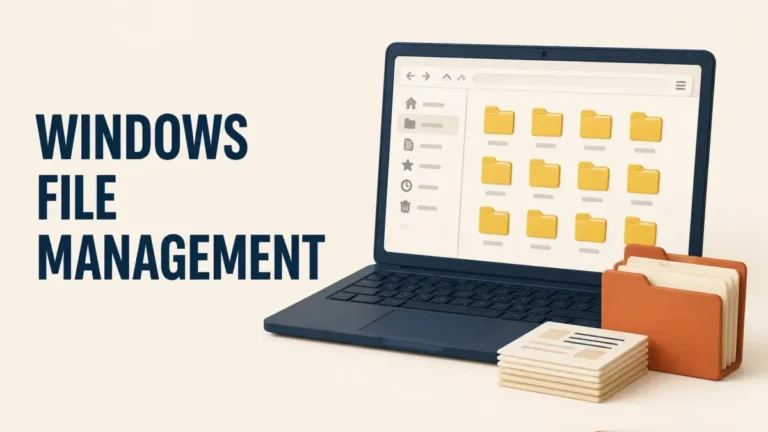
25. Rename a Whole Batch of Files at Once
Select all the files, right-click the first one, and choose Rename (or press F2). Type a name and press Enter.
Windows numbers the rest automatically — name (1), name (2), and so on. Perfect for tidying photos or downloads.
26. Create a New Folder in One Shortcut
In File Explorer or on the desktop, press Ctrl + Shift + N to make a new folder instantly.
It appears ready to name — just type and press Enter. No right-clicking through menus.
27. Preview a File Without Opening It
In File Explorer, turn on the Preview pane from the View menu, or press Alt + P.
Click any photo, PDF, or document and its contents appear on the right — handy for finding the right file without opening a dozen.
28. Permanently Delete, Skipping the Recycle Bin
Sure you will not need a file back? Select it and press Shift + Delete.
It bypasses the Recycle Bin and removes the file straight away.
Shift + Delete has no easy undo. The file does not sit in the Recycle Bin waiting for you, so use it only when you are certain — and never on something you have not backed up.
29. Get Back Into a File You Just Used
Right-click an app icon on the taskbar to open its Jump List — a menu of recent files and common actions.
It is the quickest way back into a document or folder you were working on a moment ago.

When Something Freezes or Stops Responding
30. Open Task Manager Directly
Press Ctrl + Shift + Esc to jump straight into Task Manager.
It is the fastest way to close a frozen app or spot what is eating your CPU, memory, or disk when the PC feels slow. Our full Task Manager guide covers what each column actually means.
31. Restart a Frozen Taskbar Without Rebooting
If the taskbar or Start menu freezes, you do not need to restart the whole PC.
Open Task Manager with Ctrl + Shift + Esc, find Windows Explorer in the list, and click Restart. The desktop refreshes in about a second.
32. Force-Close a Frozen App
When an app stops responding, click it and press Alt + F4 to close it.
If that does not work, open Task Manager with Ctrl + Shift + Esc, select the app, and choose End task.
Undo, Redo and Recovering What You Lost
33. Undo Almost Anything — Even a Deleted File
Ctrl + Z undoes your last action in nearly every app.
In File Explorer it goes further: it can bring back a file you just deleted or reverse a rename you regret. Try it before you panic.
34. Recover a Document You Forgot to Save
Closed Word or Excel without saving? Reopen the app and go to File, then Info, then Manage Document, then Recover Unsaved Documents.
Office quietly keeps temporary copies for exactly this moment.
Search, Display and System Info
35. Check Your PC Specs in One Shortcut
Press Windows + Pause/Break to open the About page instantly.
It lists your processor, installed RAM, and Windows version — exactly what you need when a game or app shows its requirements.
36. Control Video From the Keyboard
With a video selected, K plays or pauses, J rewinds 10 seconds, and L skips forward 10 seconds.
F toggles fullscreen and M mutes. Once these are muscle memory you will never grab the mouse mid-video again.
37. Zoom In on Anything
Hold Ctrl and scroll the mouse wheel to zoom web pages, documents, and even folder icons.
Ctrl + 0 snaps the zoom back to normal — good for tired eyes or tiny text.
38. Launch Taskbar Apps With a Number
Your pinned taskbar apps have hidden shortcuts: Windows + 1 opens the first, Windows + 2 the second, and so on.
Line up your browser, email, and file manager in order and you can open any of them without clicking.
39. Find Any Setting or App by Typing
Tap the Windows key, then just start typing what you want — bluetooth, display, or an app name.
It searches your settings, files, and the web at once, so you rarely need to dig through menus. Microsoft keeps the full reference on its Windows support site.
40. Reduce Eye Strain With Night Light
Working late? Turn on Night Light under Settings, then System, then Display.
It warms the screen colours to cut blue light, and you can schedule it to switch on at sunset.
More features Windows 11 does not advertise on the box.
Which Computer Tips and Tricks Should You Learn First?
If the list feels long, start where your own day is slowest. People who live in a browser get the most from the tab shortcuts in the first section; people who juggle windows all day should start with snapping and Alt + Tab.
The computer tips and tricks that stick are the ones you need within an hour of reading them. Everything else can wait until the first few are automatic.
Frequently Asked Questions
Do these shortcuts work the same on Mac?
Most do, with Command replacing Ctrl — reopening a closed tab is Cmd + Shift + T on Mac too. A few, like Windows + D and Windows + Pause/Break, are Windows-only with no direct Mac equivalent.
Do these work on Windows 10 as well as Windows 11?
Nearly all of them do. A couple — the snap layouts behind Windows + Z and the scrolling screenshot in Snipping Tool — are best on Windows 11, but the core shortcuts work on both.
Will middle-click work with any mouse?
It needs a mouse with a clickable scroll wheel, which is standard on most mice today. On a laptop trackpad it usually is not available unless you set up a custom gesture.
Why does the sequential rename trick not work for me?
Make sure you select multiple files before renaming the first one. If only one file is selected, Windows just renames that single file instead of numbering the rest.
Are keyboard shortcuts safe to use?
Yes. These are built-in Windows and browser shortcuts that do not change any settings permanently. If one does something unexpected, pressing it again or Ctrl + Z usually undoes it.