
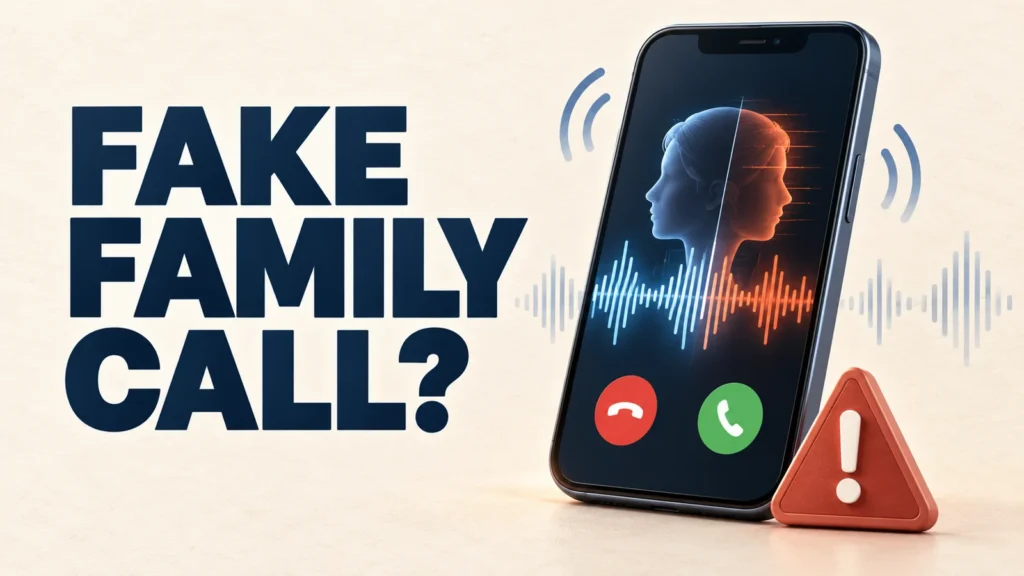
Your phone rings. A voice that sounds exactly like your son, daughter, or parent is crying and asking for help. They have been in an accident, or arrested, or stranded, and they need money right now.
That call could be an AI voice cloning scam. Criminals can copy a real person’s voice from short clips posted online and use it to fake an emergency. This guide shows how the scam works, the warning signs, and what to do before you send a single payment.
An AI voice cloning scam uses a copy of a loved one’s voice, made from short audio clips, to fake an emergency and rush you into sending money. Do not trust the voice alone. Hang up and call the person back on a number you already know, or check with another family member. Agree on a family code word in advance, and never pay by wire transfer, cryptocurrency, or gift cards because a caller demands it.
Table of Contents
ToggleHow AI Voice Cloning Scams Work
The US Federal Trade Commission warns that a scammer needs only a short audio clip of your family member’s voice, which could come from content posted online, plus a voice-cloning program. When they call, they sound just like your loved one.
The FBI gives the same warning in its public service announcement on generative AI fraud. It says criminals create short audio clips of a loved one’s voice to impersonate a relative in a crisis, asking for immediate financial help or demanding a ransom.
The stories change, but the pattern is familiar:
- A car accident, an arrest, or a hospital emergency that needs money fast.
- A relative stranded abroad who has lost their phone or wallet.
- A fake kidnapping, where the caller plays a crying voice and demands a ransom.
- A hand-off to a second person who claims to be a lawyer, police officer, or doctor.
Learn how AI is changing other online scams, from phishing to rogue AI agents.
Warning Signs of a Cloned Voice Call
An AI voice cloning scam can sound convincing, so look at the situation rather than the sound. These signs should make you stop and check:
- Extreme urgency: you are told to act in minutes, not hours.
- A request for secrecy: the caller asks you not to tell other family members.
- Hard-to-trace payment: the FTC says requests to wire money, send cryptocurrency, or buy gift cards and share the card numbers could be signs of a scam.
- An unknown number or a poor connection: the caller explains why they are not using their usual phone.
- Something feels off: the FBI suggests listening closely to tone and word choice, which may not match how your relative really speaks.
- Short answers: the voice avoids personal questions or keeps passing the call to someone else.
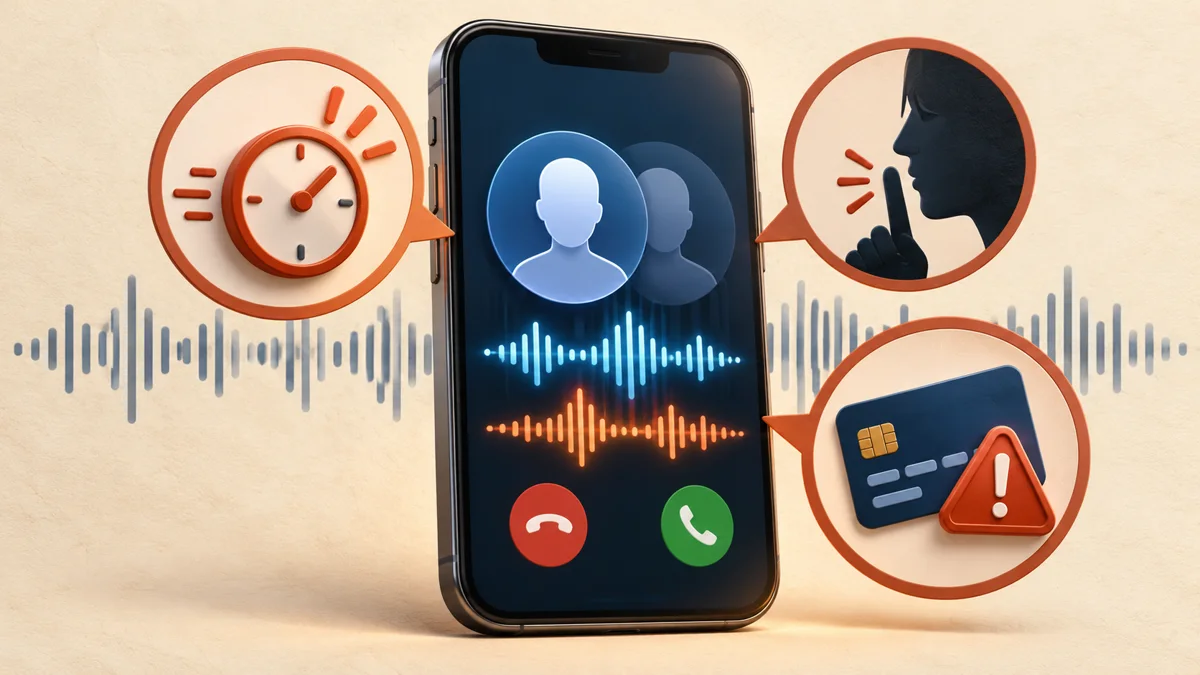
A familiar voice is no longer proof of identity. The FTC’s advice is simple: do not trust the voice. Verify the story through a separate channel before you act.
What to Do During a Suspicious Call
If a call feels wrong, slow it down before sending money. Taking a minute to verify does not stop you from calling emergency services if someone may be in immediate danger.
- Stay calm and do not agree to send money or share any codes.
- Ask for your family code word, or a question only the real person could answer.
- Hang up, even if the caller begs you to stay on the line.
- Call your relative back on the number already saved in your phone, not the number that called you.
- If you cannot reach them, contact another family member or their friends to confirm where they are.
- Never share bank details, one-time passcodes, or personal information during the call.
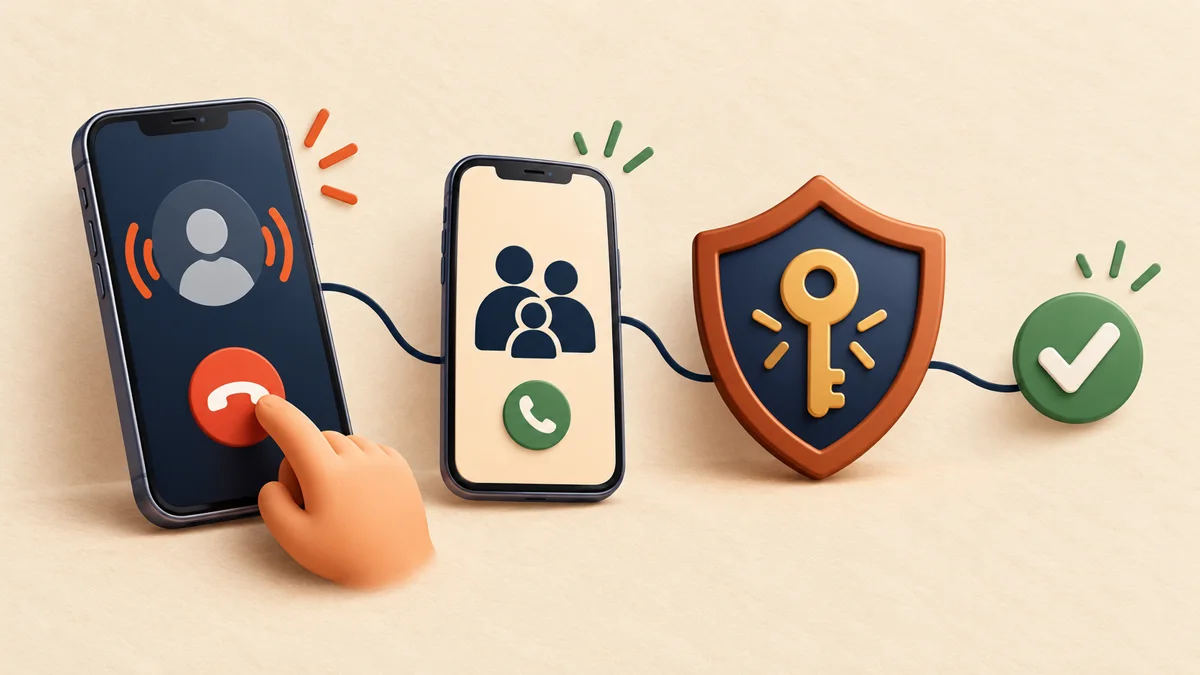
If the caller claims to be from the police, a hospital, or a bank, look up that organisation’s official phone number yourself and call it directly. The FBI recommends hanging up and researching the contact before calling back.
How to Protect Your Family Before It Happens
A few minutes of planning makes this scam far less likely to work on anyone in your family.
Set Up a Family Code Word
The FBI recommends creating a secret word or phrase with your family to verify identity. Choose something that is not on social media, such as a private joke or an unusual phrase.
Agree that anyone asking for urgent money must give the code word. Also agree that it is always acceptable to hang up and call back.
Limit Public Voice and Video Clips
Voice clones are built from real recordings. The FBI suggests limiting online content of your image or voice where possible, making social media accounts private, and limiting followers to people you know.
Talk about this with older relatives too. They are often the people these calls target, and a short conversation now can stop a panicked payment later.
A broader checklist for spotting phishing, fake websites, and other common scams.
What to Do If You Already Sent Money
After an AI voice cloning scam, act quickly. The sooner you report a payment, the better the chance of stopping or tracing it.
- Contact your bank, card issuer, or payment app immediately and ask them to stop or reverse the payment.
- If you paid with gift cards, contact the card company and keep the cards and receipts.
- If you sent cryptocurrency, contact the exchange or service you used.
- Change any passwords or PINs you shared, and turn on two-step verification.
- Report the scam. In the US, report it to the FTC at ReportFraud.ftc.gov and to the FBI at ic3.gov. Elsewhere, contact your local police and your country’s official cybercrime reporting service.
When you report to the FBI, it asks for details such as the caller’s phone number, the payment date, amount, and method, and a description of how the contact happened. Write these down while you remember them.
See how another impersonation scam escalates, and the payment red flags it shares with fake emergency calls.
Frequently Asked Questions
How much of my voice does a scammer need?
The FTC says a scammer needs only a short audio clip of someone’s voice, which could come from videos or other content posted online.
Can scammers fake video calls as well?
Yes. The FBI warns that criminals use AI-generated video in real-time video chats and to make it look like they are a real person, so verify identity the same way.
Does a family code word really help?
Yes. The FBI recommends a secret word or phrase that only your family knows. A cloned voice can copy how someone sounds, but not information it has never heard.
Where do I report an AI voice cloning scam in the US?
Report it to the FTC at ReportFraud.ftc.gov and to the FBI Internet Crime Complaint Center at ic3.gov. Contact your bank first if you sent money.
Slow Down and Verify
An AI voice cloning scam works by creating panic so you act before you think. A code word, a call-back rule, and a moment to verify take that power away.
Share this guide with your family, especially older relatives, and agree on your plan today.